
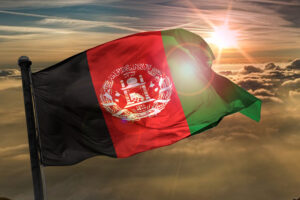
Under the current Taliban government, the situation for girls’ education in Afghanistan is extremely restrictive and remains one of the most serious educational and human-rights crises in the world.
Current Status of Girls’ Education in Afghanistan
Afghanistan is currently the only country in the world where girls are formally barred from secondary and higher education on a nationwide basis. Since the Taliban returned to power in August 2021, they have progressively restricted access to education for girls and women.
Primary Education
Girls are generally still permitted to attend primary school, typically through Grade 6 (approximately age 11–12). However, implementation can vary somewhat by province and local authorities.
Secondary Education
Girls are generally prohibited from attending secondary school (Grades 7–12). The Taliban initially promised secondary schools would reopen, but the ban has remained in place for years.
Higher Education
Women are also effectively barred from universities and many other forms of formal postsecondary education.
Are Girls Allowed to Study Through Homeschooling?
This is where the situation becomes less formally regulated and more informal.
The Taliban have not established a widely recognized national homeschooling framework comparable to systems used in countries such as the United States or Canada. However, many Afghan families and underground educational networks have attempted to continue girls’ education through:
- home-based learning,
- informal tutoring,
- online instruction,
- underground schools,
- community learning circles,
- and remote international education programs.
These arrangements generally operate in a legal gray area. Some are tolerated quietly; others risk interference or closure.
Can Homeschooled Girls Sit for University Entrance Examinations?
This is currently one of the most uncertain and inconsistent areas.
Afghanistan’s university entrance examination is known as the Kankor.
In practice:
- girls have faced severe restrictions in sitting for the Kankor because universities themselves are largely closed to women;
- eligibility often depends on possession of recognized secondary-school credentials;
- and informal homeschooling usually does not produce officially recognized graduation documents.
As a result, even if a girl continues studying privately at home, she may not have a recognized pathway into Afghanistan’s formal higher education system under current Taliban policy.
Some Afghan girls pursue alternative pathways through:
- foreign online schools,
- international examination systems,
- schools operating outside Afghanistan,
- or relocation to neighboring countries.
But inside Afghanistan, there is no clear, standardized national mechanism for recognizing informal homeschooling as equivalent to secondary education.
What Documents Are Issued to Homeschooled Girls?
This depends entirely on the type of educational arrangement.
- Informal Home Education
If a girl is simply studying privately at home with family members or tutors:
- typically no officially recognized transcript or diploma is issued;
- there is usually no Ministry of Education certification;
- and the education may remain unofficial and undocumented.
- Underground or Community Schools
Some underground schools or NGO-supported educational programs may issue:
- internal transcripts,
- certificates of attendance,
- or completion letters.
However, these are often not officially recognized by Taliban authorities.
- International or Online Schools
Some Afghan girls enroll remotely in:
- foreign online schools,
- international secondary programs,
- or refugee education systems.
In those cases, documents are issued by the foreign or international institution itself, not by the Afghan Ministry of Education.
Examples may include:
- accredited online high schools,
- Pakistani or Iranian schools,
- international NGOs,
- or alternative educational programs for displaced Afghan students.
Key Issue for Credential Evaluators
For credential evaluators and admissions officers, the major challenge is that many Afghan girls currently have interrupted, informal, partially documented, or unofficial educational histories.
You may encounter:
- missing transcripts,
- incomplete secondary education,
- unofficial certificates,
- online-school documentation,
- NGO-issued records,
- or significant educational gaps caused by Taliban restrictions rather than academic failure.
This context is critically important when assessing Afghan female applicants.
Bottom Line
Under the current Taliban government:
- Girls are generally permitted to attend primary school only through about Grade 6.
- Secondary education for girls is broadly banned nationwide.
- Women are largely barred from universities.
- Homeschooling and underground education do exist, but mostly informally.
- Afghanistan currently lacks a clear nationally recognized homeschooling credential system.
- Homeschooled girls generally do not automatically receive official Afghan diplomas or transcripts.
- Access to university entrance examinations and higher education remains severely restricted for girls, even if they continue studying privately.
Here are the references and source materials you can include at the end of your blog. I formatted them in a cleaner blog/reference style rather than raw URLs.
References
- UNESCO – “Banned from Education: A Review of the Right to Education in Afghanistan”
UNESCO report examining the legal and institutional framework governing education in Afghanistan since August 2021. - UNESCO – “Protecting the Right to Education for All Afghans”
Overview of UNESCO’s position and data regarding restrictions on girls’ secondary and higher education in Afghanistan. - UNESCO & UNICEF – “UNESCO and UNICEF Urge Action to Protect the Right to Education in Afghanistan”
Joint statement discussing the nationwide ban on girls’ secondary and higher education. - UNICEF Afghanistan – Education Overview
Background information on Afghanistan’s education system and barriers affecting girls’ access to education. - UNESCO – “Afghanistan: Four Years On, 2.2 Million Girls Still Banned from School”
UNESCO statement on continuing restrictions affecting Afghan girls’ education. - UNESCO – “UNESCO Gives Voice to Afghan Girls and Women and Calls for Their Rights to Be Restored”
Discussion of the impact of Taliban restrictions on girls over age 12. - UNICEF – “Restrictions on Girls’ Education and Women’s Employment in Afghanistan Could Lead to Loss of Over 25,000 Female Teachers and Health Workers by 2030”
Analysis of the long-term societal impact of restricting girls’ education. - Education Cannot Wait – “We Must Unite for the Girls of Afghanistan”
Commentary on the impact of educational restrictions and the growth of informal education pathways. - Reuters – “UNICEF Warns Afghanistan Could Lose Up to 25,000 Female Health Workers, Teachers”
Reporting on UNICEF findings regarding educational restrictions and workforce consequences. - Associated Press – “UNICEF Calls on the Taliban to Lift Ban on Girls’ Education as New School Year Begins in Afghanistan”
News coverage regarding ongoing restrictions on girls’ secondary education. - Associated Press – “1,000 Days Have Passed Since the Taliban Barred Girls from Secondary Education”
Reporting on the continuing impact of Taliban education policies. - The Guardian – “Open the Schools: Afghan Girls Protest in Kabul for Right to Education”
Coverage of protests demanding reopening of girls’ secondary schools. - The Guardian – “Taliban Move to Ban Women Training as Nurses and Midwives”
Discussion of expanding educational restrictions affecting women in healthcare training.
Note: Conditions and enforcement practices in Afghanistan may vary by province and are subject to rapid change under current political conditions.

#Afghanistan #GirlsEducation #WomenInEducation #Taliban #HigherEducation #InternationalEducation #CredentialEvaluation #Admissions #EducationPolicy #HumanRights #EducationalEquity #RefugeeEducation #GlobalEducation #WomenRights #AfghanWomen
